


The golden age of easy casino SEO is over. But spam still works. Parasite pages still rank. Expired domains still move SERPs. Aggressive link building still pushes pages to the top. The difference is simple: most tactics stopped being durable.
In modern iGaming SEO, ranking is easy. Staying ranked is the hard part.
Over the past 6+ years, I've worked on SEO growth across some of the most competitive iGaming, authority building, and scalable ranking systems in affiliate markets. Speaker at Collaborator, Kyiv iGaming Affiliate Conference, World Affiliate Show & ZM CONF. Creator of the PBNSEO.PRO iGaming SEO Course.
What follows isn't theory. It's eight real projects - what was done, what the numbers looked like, and what the work actually taught me about how iGaming SEO operates in practice.
The Industry Split Into Two SEO Models
Churn & Burn SEO still revolves around parasite pages, redirects, PBNs, disposable domains, and mass-scaled AI content. It still works. It still makes money. But it's unstable by design.
Entity SEO is built around brands, direct traffic, topical authority, PR, media signals, and user trust. Harder to build. But it compounds long term.
Most operators don't pick one model consciously. They drift between both - and that's usually what breaks them when a core update hits.
What Actually Works in iGaming SEO: 8 Real Cases
From 0 to 1.24M Traffic in 12 Months (Brazilian Market)
One project started from absolute zero in the Brazilian market. In the first month: 52K traffic. Within twelve months: 1.24M monthly organic.
The advantage wasn't content volume. It was structure, speed, and execution. Before competitors fully entered the market, the project already had fast indexing, strong internal authority flow, high-intent commercial pages, and an aggressive but controlled link acquisition strategy. The entire site was built around trust, search intent, and scalable growth from day one.
What this actually looked like in practice: The first 90 days were almost entirely technical and structural - no mass content production, no link buying. Internal architecture, crawl efficiency, and commercial page depth came first. By the time content scaling started, the foundation was already earning Google's trust. That sequencing is what most projects get backward.
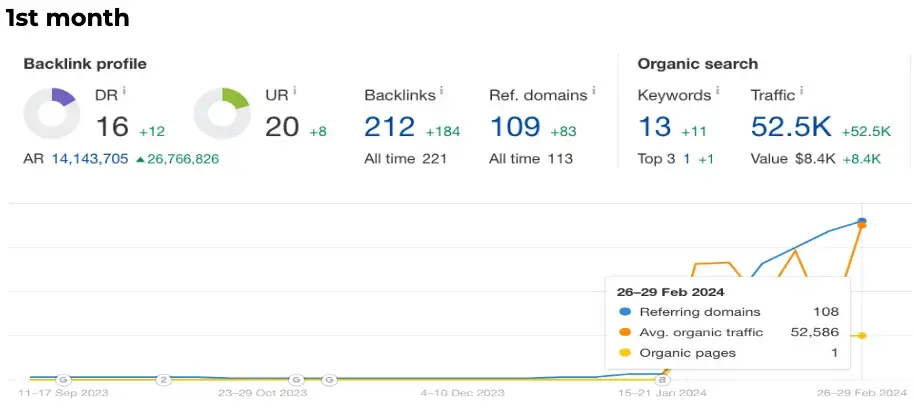
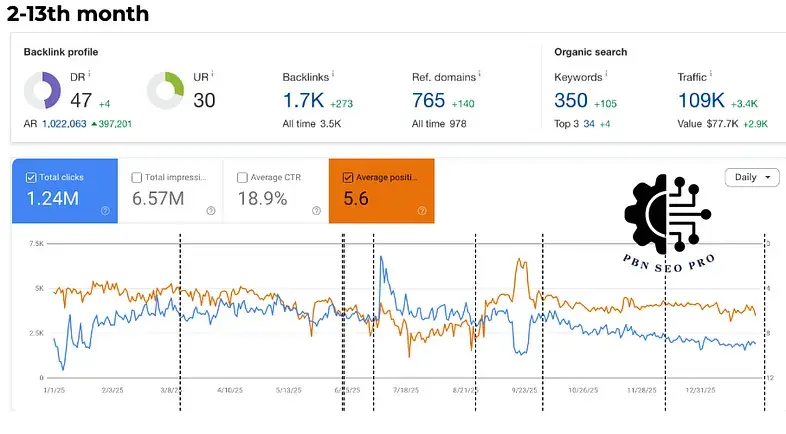
Brazil in 2023-2024 was a window. Not a permanent opportunity - a window. The teams that understood that moved fast and built defensible positions before the market got crowded. The teams that waited for the "right time" are still waiting. Speed isn't about cutting corners. It's about understanding when the competitive landscape is soft enough that execution pace becomes the differentiator.
Recovering from a -90% Google Penalty
A project dropped from 66K to 16K traffic after multiple Google penalties. The site had more than 10,000 pages indexed and ranked top 1-3 across most keywords in the niche before the penalty. Clicks in Search Console dropped from 2,255 to 199.
In 40 days: recovered and grew back to 64K - plus 80% beyond the original baseline.
What was done:
- Fixed hreflang, alternate tags, and indexing issues
- Reworked internal linking logic
- Cleaned toxic backlinks and removed non-canonical URLs related to http:// and www
- Improved Core Web Vitals and page rendering
- Rewrote underperforming content and added proper authorship, expertise, and trust signals
- Rebuilt robots.txt from scratch and pushed updated sitemaps through Search Console
What this actually looked like in practice: The first week was diagnosis only. No changes. Just understanding what Google actually penalized - not what looked suspicious on the surface. The penalty wasn't from one thing. It was a combination of technical signals that accumulated over time until a core update used them as a reason to pull rankings.
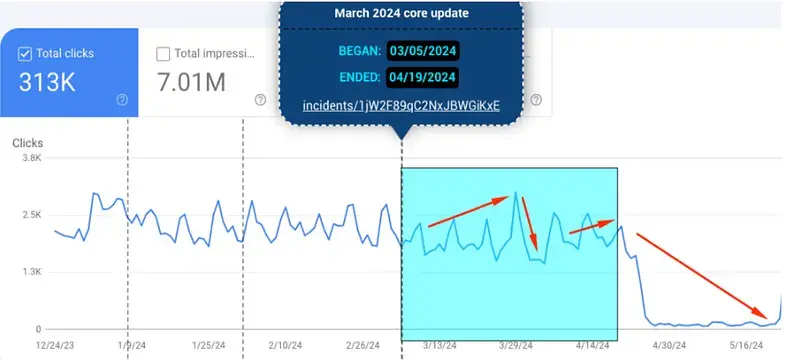
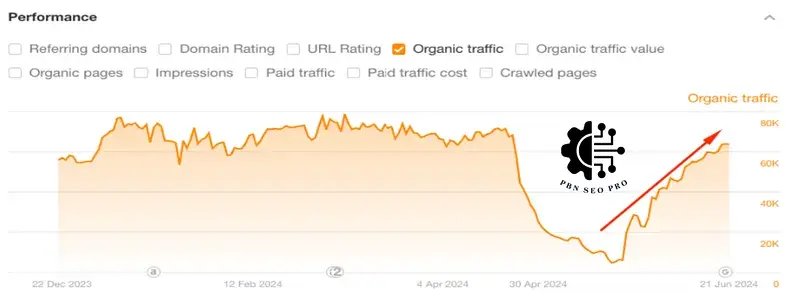
Penalty recoveries fail most often because the diagnosis stops too early. People find the most obvious issue, fix it, submit a reconsideration request, and then wonder why nothing changed. In this case, the hreflang mess was visible immediately - but it wasn't the core problem. The internal linking was passing authority to pages that had no business ranking. Forty days here was actually fast.
EMD SEO at the Top: Ranking in a KD 70+ Dutch Market
A new high-potential domain was identified and registered for a project targeting a top-tier brand in the Dutch market. The niche was highly competitive - KD 70+ - where new domains typically struggle to gain any visibility.
The site reached top positions within a short window. Structure was built for scale from day one: custom WordPress + ACF setup for fast content deployment, controlled internal authority flow, and scalable expansion across commercial clusters. Five additional domains were launched in parallel to strengthen the broader authority strategy.
The site launched with 15 strategically planned pages covering bonuses, login, app functionality, and core commercial clusters. Technical execution:
- Core Web Vitals optimized to a performance score of 98
- Structured data implemented for clean internal architecture
- High-quality outreach backlinks from topically relevant authority sites
- Contextual linking applied across all content
- All images converted to WebP
Results: $2,400 total link-building budget. 80+ first-time deposits per week. Growth to 157 clicks per day.
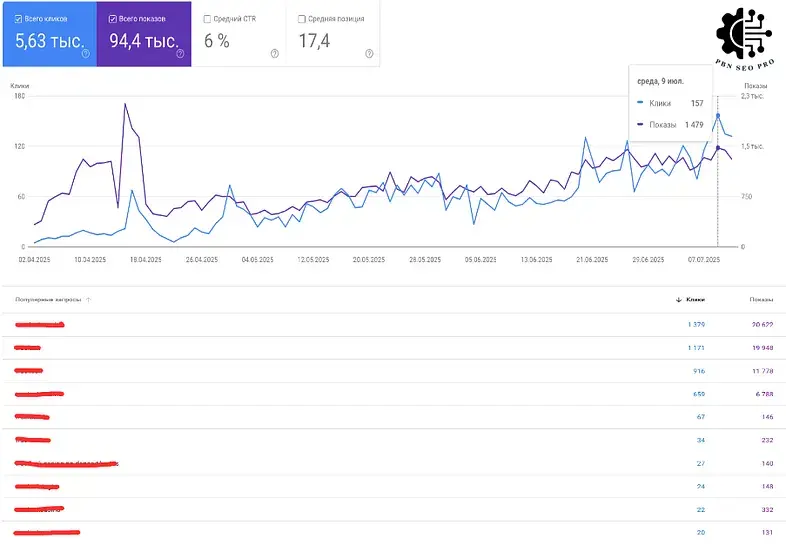
KD 70 is the kind of number that makes most SEO teams say "we need more time before we can compete here." The Dutch market is brutal - high regulatory scrutiny, sophisticated competition, and an audience that doesn't convert unless they trust you. What made this work wasn't the budget. It was the architecture. When Google crawls a new site and the structure already tells a coherent story about what the site is, who it's for, and what it covers - that's what accelerates indexing and early ranking signals.
Rapid SEO Growth from Day One: 0 to 5.5K Traffic in a New Market
A project launched on a high-quality expired domain targeting the Kazakhstan market. Day one: 114 clicks within the first 24 hours. Monthly traffic scaled to ~5.5K.
What was done:
- Expired domain selected based on strong backlink history and topical alignment
- Competitor sites analyzed manually to find converting keywords and content gaps
- Content optimized around commercial and high-intent queries
- Technical SEO requirements defined and implemented from the start
- Backlink profile evaluated and reinforced where needed
Results: 114 clicks on day one. ~5.5K organic traffic per month. Top 1-3 positions across key queries. ~3-5 conversions per day. Only 42 referring domains.
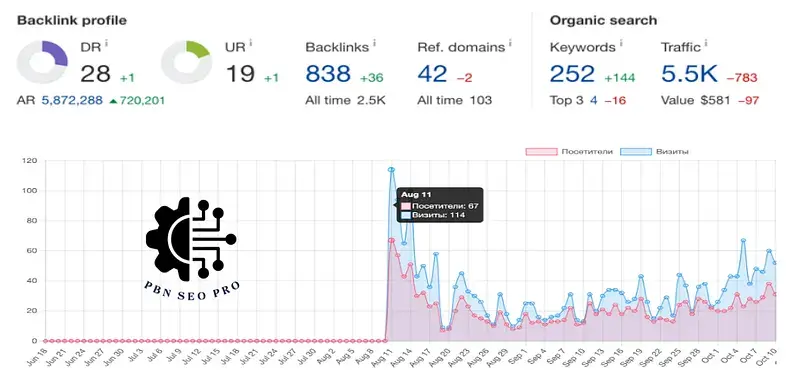
The Kazakhstan case is the one I use to explain why expired domain selection matters more than most people think. 42 referring domains is a tiny backlink profile. Most new sites with that profile would be invisible for months. The difference was that the domain's existing authority was already recognized by Google in the right topical space. You're not starting from zero - you're starting from wherever the previous site left off.
Crypto iGaming Platform: Scaling Across Multiple GEOs on a JavaScript Stack
The platform operated in a highly competitive market alongside major brands including Stake and BC.Game. Built entirely on JavaScript - which created a specific set of SEO challenges: Core Web Vitals issues, rendering and indexing problems, self-referencing canonicals, unclear main content signals, and crawl efficiency problems.
Target: 7 languages. Main GEOs - Brazil, Philippines, Vietnam, Bangladesh, Thailand, India, and the United States.
Results after 7 months: 300+ daily clicks. 1,200+ indexed pages. 21K+ total clicks. CTR 5.3%. Average position: 6.9. Up to 155 first-time deposits per week.
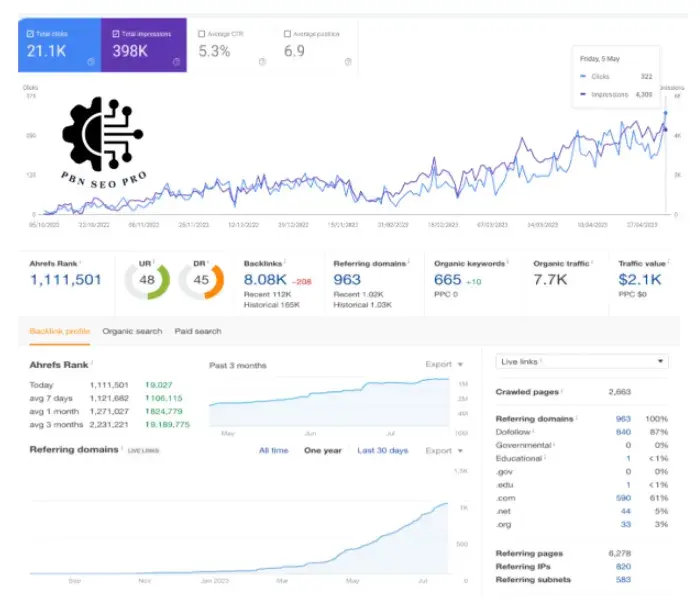
JavaScript SEO in iGaming is where a lot of teams reach their ceiling. The fixes are technical and they're slow - you can't move fast on a JS-heavy platform the way you can on a well-configured WordPress setup. What saved this project was treating the technical and international layers as two separate workstreams with their own timelines and success metrics. Trying to fix crawl issues and localize content at the same time - that's how international expansion becomes a disaster.
EnergyCasino: Building a 100K/Month Organic Machine from the Inside
EnergyCasino is a household name in European casino circles - pulling 1.7 million organic visits a month. This wasn't a short consulting engagement - it was operational leadership of the full SEO function from inside the organization.
What was built:
- A network of satellite sites supporting the main domain
- Full operational playbooks for PBN creation, management, and quality control
- A review portal spanning 3 languages and 200+ pages
- Roadmaps and link promotion strategies across two competitive GEOs
- Integration with top CPA and CPL affiliate partners
Traffic result: Organic traffic grew from 55,000 to 100,000 monthly visits in 12 months - a near 2x increase in a niche where most established brands fight for single-digit percentage gains.
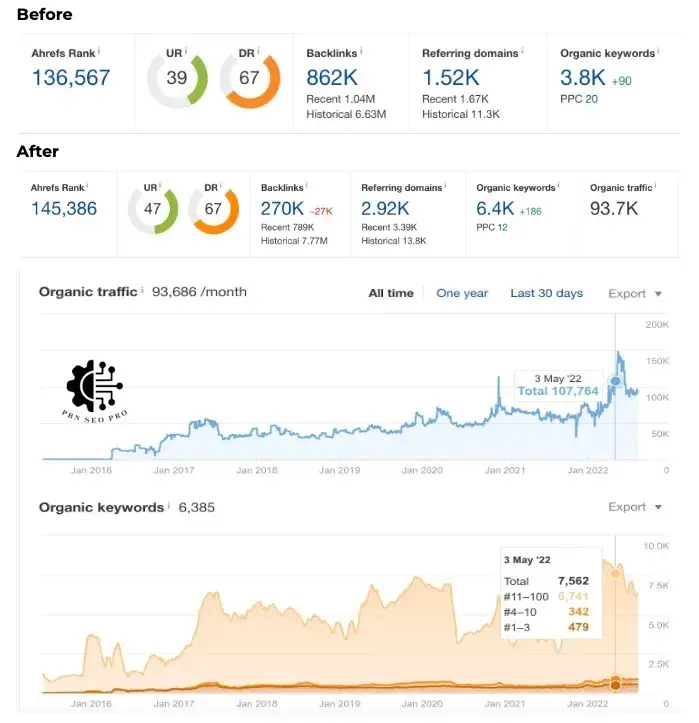
EnergyCasino taught me something I hadn't fully understood before: in-house SEO at a major brand is almost entirely a systems and people problem, not a tactics problem. The tactics were clear. Building a team that executes those tactics consistently, at the same quality standard, across two GEOs simultaneously - that's the actual challenge. Without documented processes, every new hire resets your quality level to zero.
Doxy.me: 9 Million Visits/Month in Telemedicine at the Peak of COVID-19
Doxy.me was already one of the more established telehealth platforms in the US - and the timing couldn't have been stranger. COVID had just made virtual doctor visits go from a niche convenience to something hundreds of millions of people suddenly needed and didn't know how to find.
What was done:
- Built a 6-month roadmap covering technical audit, content strategy, link building, and overall SEO direction
- Executed site migration to WordPress - preserving rankings while improving the technical foundation
- Improved the customer interaction flow across key landing pages
- Built a content and link acquisition system matched to the platform's authority level
Result: ~9 million visits per month.
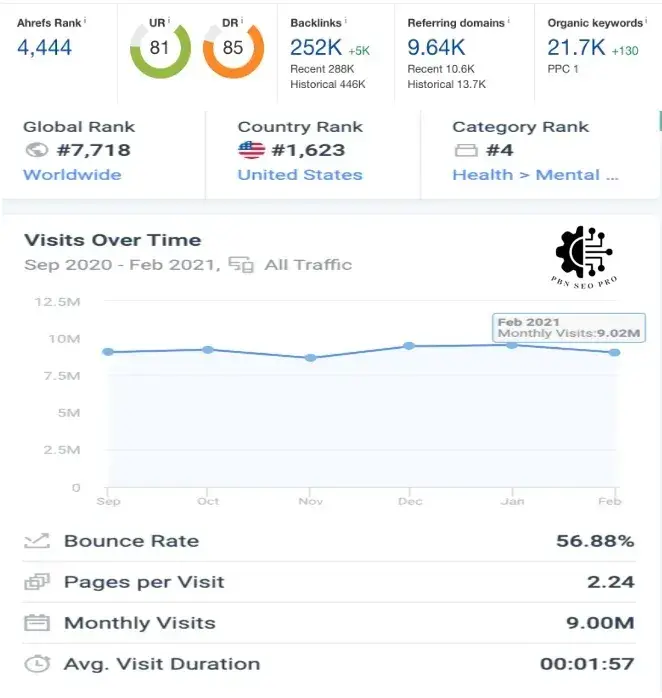
Doxy.me is the project I think about when people ask whether SEO has real-world impact. This wasn't driving people to a casino. This was helping patients find their doctor during a pandemic. Nine million monthly visits means nine million people who found what they needed. That number means something different than it does in most niches.
Ninjaoutreach: 40K to 100K in 6 Months Through Technical Execution
Ninjaoutreach is an influencer marketing and outreach platform competing in the cutthroat SaaS space. The engagement was structured around a clear 6-month plan with specific goals.
What was done:
- Developed and implemented a full technical audit
- Optimized internal page templates for Instagram and YouTube profile pages - high-volume, underperforming pages with significant traffic upside
- Ran the full link building and content operation across the entire six months
Result: 40K monthly visits became 100K in six months - 2.5x growth in a space where most SaaS sites are happy with 20% year-over-year.
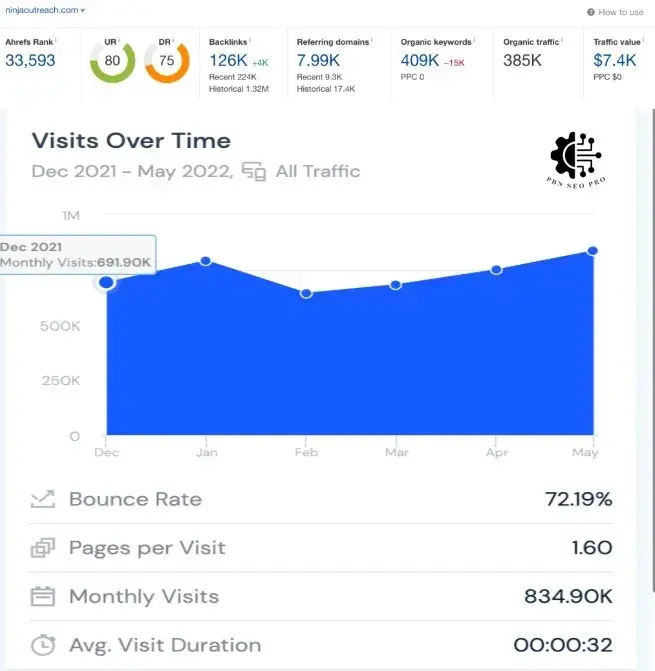
SaaS SEO shares one thing with iGaming: the biggest wins almost always come from fixing what's already there, not from adding more. Ninjaoutreach had the authority. They had the indexed pages. What they didn't have was templates that actually used that authority efficiently. Template SEO is unglamorous work - you're not creating anything new. But the traffic impact is often 3-5x what you'd get from the same effort spent on new content.
What Most SEO Specialists Still Don't Understand
Most gambling sites don't die because of one Google update. They slowly decay - bad internal linking, duplicate intent, weak structure, random scaling, poor localization - and then one core update finishes the job.
Publishing thousands of AI-generated pages without a distribution strategy is not scale. It's automated irrelevance.
The operators who expand successfully treat each GEO as a separate editorial and technical problem - not a translation task. Every GEO has different intent, different betting behavior, different bonus expectations, and different trust patterns.
PBNSEO.PRO iGaming Course
Everything documented in these eight cases - the domain selection methodology, the PBN operational playbooks, the penalty recovery diagnostics, the technical audit frameworks, the GEO expansion playbooks - is what the course is built around.
Not theory. Not generic SEO principles. The actual systems used across real projects in iGaming and adjacent competitive niches.
| Course Module | What You Get |
|---|---|
| Expired domain selection for iGaming | Filters, metrics, vetting - what actually matters |
| PBN architecture and hosting | IP diversification schemes, CMS setup, footprint minimization |
| Content systems for satellite sites | Volume, structure, AI without risk - with real examples |
| Anchor planning and link velocity | Distribution, pace, rotation for competitive niches |
| Technical SEO for iGaming sites | Core Web Vitals, crawling, hreflang, indexation |
| GEO expansion and localization | Market frameworks - Brazil, Netherlands, Asia |
| Penalty recovery | Diagnostics, protocols, recovery roadmaps |
| AI agents in SEO workflows | Automating routine without losing quality |
| Real case walkthroughs | Data, decisions, mistakes - what worked and why |
FAQ
Long Story Short
Google didn't kill aggressive SEO. It killed weak SEO teams.
Parasites still rank. Expired domains still work. Strong links still move SERPs. But rankings disappear much faster when the foundation is weak.
In modern iGaming SEO, short-term traffic can still be manipulated. Long-term visibility has to survive the next update. The teams still operating at the top in 2026 aren't the ones who found a better trick. They're the ones who built something that didn't need to rely on tricks to hold its position.
After 8 years in iGaming, one thing is clear: the best results always come from those who understand the system from the inside. Not because they don't make mistakes - but because they know how to fix them and how not to repeat them. PBNSEO.PRO isn't a promise of an easy path. It's the shortest path to doing this right.

